
Year End Tax Planning Strategies for Business Owners and Investors

Waiting until tax season to think about taxes often means fewer choices. By December, many of the most useful decisions for business owners, entrepreneurs, real estate investors, and high-income individuals still need to happen before the year closes.
The good news is that year-end planning does not have to be confusing. A few focused moves can help you understand your position, avoid surprises, and make smarter decisions before December 31. The right strategy depends on your income, entity type, investment activity, cash flow, and long-term goals, so personalized advice matters.

Review income and deductions before the year closes
A year-end tax projection is one of the most practical steps you can take. It gives you a working picture of taxable income, expected deductions, estimated tax payments, and possible exposure before returns are prepared.
For business owners, this often means reviewing:
Year-to-date profit and loss
Accounts receivable and accounts payable
Owner draws, distributions, and payroll
Estimated tax payments already made
Large purchases or expenses planned before year-end
If your business reports income on a cash basis, timing may matter. In some cases, accelerating deductible expenses into the current year or delaying income until the next year may help. In other cases, showing more income this year could make sense, especially if rates, credits, phaseouts, or financing goals are part of the picture.
For example, a profitable consulting firm may choose to pay certain vendor bills, software subscriptions, or professional fees before December 31. A real estate investor may review repairs, mortgage interest, property taxes, and insurance costs to make sure records are complete and properly categorized.
These choices should be made with care. A deduction is only useful if it fits the business need and the tax situation.
Make sure your entity and compensation strategy still fits
Business growth can make last year’s tax structure outdated. A sole proprietor, partnership, LLC, S corporation, or C corporation may each create different tax results.
For S corporation owners, year-end is a good time to review reasonable compensation. Paying yourself too little through payroll can create compliance issues. Paying too much may reduce the benefit of the S corporation structure. The right number depends on duties, revenue, industry, time worked, and comparable pay.
Owners should also review distributions, loans to or from the company, health insurance treatment, and retirement plan contributions. Small issues can become expensive when books are not clean.
Example
A growing entrepreneur with strong profit may need to compare remaining an LLC taxed as a sole proprietorship against an S corporation election for a future year. That decision should include payroll costs, state rules, administrative work, and retirement planning, not just federal income tax.

Use retirement and benefit planning wisely
Retirement contributions can serve two goals at once. They can help build long-term wealth and may reduce current taxable income when structured correctly.
Business owners may have several options, such as a SEP IRA, SIMPLE IRA, solo 401(k), or employer-sponsored plan. Each has different contribution limits, deadlines, employee coverage rules, and administrative requirements.
High-income individuals should also review:
Traditional retirement contributions
Roth conversion opportunities
Health savings account eligibility
Charitable giving plans
Tax-loss harvesting in taxable investment accounts
A Roth conversion, for instance, may increase taxable income now but reduce future taxable income. That can make sense in select years, such as when income is temporarily lower. It can be a poor fit in a high-income year if it pushes other tax costs higher.
Charitable planning also deserves attention. Donating appreciated securities, using donor-advised funds, or bunching multiple years of gifts into one year may help some taxpayers itemize deductions. The value of these strategies depends on your deduction level, income, and giving goals.
Plan carefully for real estate tax opportunities
Real estate investors often have more planning options than they realize. The key is documentation.
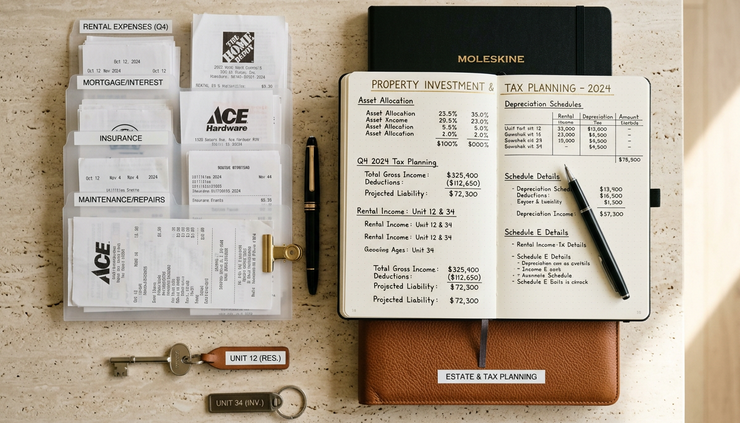
Rental property owners should review repairs versus improvements, depreciation records, mortgage interest, property tax payments, travel records, and entity structure. Misclassifying a capital improvement as a repair, or missing depreciation details, can distort taxable income and create issues later.
Cost segregation may be useful for some investors with commercial property, short-term rentals, or larger residential rental holdings. It identifies building components that may qualify for shorter depreciation lives. This can increase early deductions, but it may also affect future gain, depreciation recapture, and financing metrics.
Short-term rental owners should be especially careful. The tax treatment can differ from traditional long-term rentals. Material participation, average guest stay, services provided, and personal use may all affect reporting.

These real estate strategies are not one-size-fits-all. They should be reviewed alongside your broader year end tax planning strategies for business owners and investors, especially if you also own an operating company or have W-2 income.
Clean up your books and estimated taxes
Good tax planning starts with reliable accounting. If the books are incomplete, tax projections become guesswork.
Before year-end, reconcile bank accounts, credit cards, payroll records, loan balances, and merchant processor deposits. Review uncategorized transactions and confirm that personal expenses have not been mixed with business deductions.
This is also the time to review estimated tax payments. Business owners and investors often have income that does not have enough withholding, including K-1 income, rental income, capital gains, and pass-through profit. A fourth-quarter review can help reduce the risk of underpayment penalties and cash flow surprises.
A clean set of books can also support better business decisions. You can see which services, properties, or investments generate profit and which ones need attention.
Take action before December 31
Year-end tax planning works best when it is proactive, specific, and tied to your full financial picture. The goal is not to chase deductions. The goal is to make informed decisions while there is still time to act.
The Greenberg Group, based in Scottsdale, Arizona, works with business owners, entrepreneurs, real estate investors, and high-income individuals nationwide. If you want a clearer view of your tax position before year-end, schedule a free consultation with The Greenberg Group to discuss strategies that fit your specific situation.
This article is for informational purposes only and is not tax, legal, or financial advice. Tax rules change, and the right approach depends on your individual facts.


Comments